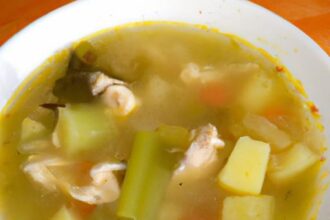

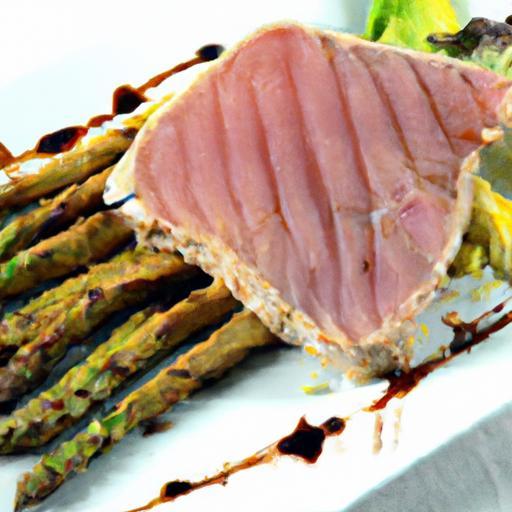
Beneath the shimmering Aegean sun and along the rugged coastline of ancient Greece, seafood was not merely sustenance-it was an art form, a celebration of nature’s gifts crafted with reverence and skill. Among these culinary treasures, the grilled tuna steak stands out as a timeless emblem of ancient Greek gastronomy. This dish, simple yet profound, marries the robust flavors of the sea with age-old techniques that have been passed down through generations. Join us on a journey to explore how the grilled tuna steak embodies the spirit of ancient Greek seafood artistry, unveiling a flavorful legacy that continues to captivate palates and preserve a rich cultural heritage.
Grilled Tuna Steak is more than just a meal-it’s a journey into the heart of ancient Greek culinary traditions where fresh seafood met simple yet powerful flavors. In classical Greece, tuna was celebrated not only for its robust taste but also for its versatility, prized by fishermen and gourmets alike. Infused with herbs and marinades reminiscent of the Mediterranean coast,this dish captures the essence of timeless seaside feasts. Inspired by those ancient techniques, you’ll master the art of marinade and grilling that amplifies the natural depth of tuna without overpowering it.
Prep and Cook Time
- Preparation: 15 minutes
- Marinating Time: 1 hour
- Cooking Time: 8-10 minutes
- Total: Approximately 1 hour 25 minutes
Yield
Serves 4 people generously
Difficulty Level
Medium – Ideal for cooks with basic grilling skills looking to elevate classic seafood dishes
Ingredients
- 4 fresh tuna steaks, about 6 oz each and 1-inch thick
- 1/4 cup extra virgin olive oil
- 3 cloves garlic, finely minced
- 2 tbsp fresh lemon juice (preferably from an organic lemon)
- 1 tbsp dried oregano (Greek oregano preferred)
- 1 tsp fresh ground black pepper
- 1 tsp sea salt
- 1 tsp crushed red pepper flakes (optional for subtle heat)
- 2 tbsp finely chopped fresh parsley
- 1 tbsp capers, rinsed and roughly chopped
- 1 lemon, sliced, for grilling and garnish
Instructions
- Prepare the marinade: In a medium bowl, whisk together the olive oil, lemon juice, minced garlic, oregano, black pepper, sea salt, and red pepper flakes until well combined. This blend echoes the robust classical flavors that characterized ancient Greek tuna dishes.
- Marinate the tuna steaks: place the tuna steaks in a shallow glass or ceramic dish. Pour the marinade over them, ensuring each steak is evenly coated. Cover and refrigerate for at least 1 hour-this allows the acidic lemon juice to gently tenderize the fish while infusing it with herbs.
- Preheat your grill: whether using a charcoal or gas grill, bring it to medium-high heat (about 450°F / 230°C). Brush the grill grates with oil to prevent sticking and to create those signature grill marks.
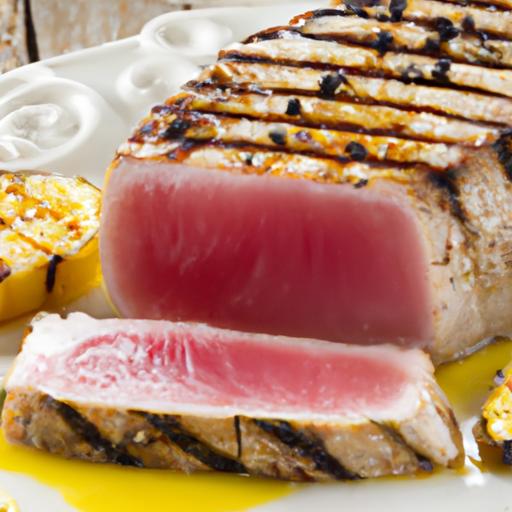
- Grill the tuna steaks: Remove the steaks from the marinade, allowing the excess to drip off. Place each steak on the hot grill and cook for 4-5 minutes per side for medium-rare doneness. For well-done, grill an additional 2 minutes per side. Tuna is best enjoyed with a pink, tender interior to preserve its natural flavor and moisture.
- Add lemon slices: During the final grilling minutes, place lemon slices on the grill next to the tuna. their slight charring will yield a smoky citrus aroma to enhance each bite.
- Rest and garnish: Remove the tuna from the grill, and let rest for 3-4 minutes. Sprinkle the chopped parsley and capers over the steaks, adding a fresh, briny pop that balances the richness of the fish.
- Serve: Present each steak elegantly on rustic plates with grilled lemon wedges on the side for an extra burst of brightness.
Chef’s Notes & Tips for Success
- Marinating Precision: Avoid marinating longer than 2 hours, as the acid can start cooking the fish and alter its texture.
- Don’t Overcook: Tuna is best served medium-rare; look for an opaque edge but a vibrant pink center to preserve juiciness.
- Substitutions: If fresh oregano is unavailable, substitute with thyme or marjoram for a slightly different herbal note.
- Make-Ahead: Prepare the marinade in advance, but only marinate the fish just before cooking for the freshest results.
- Indoor Grilling: Use a grill pan on high heat if an outdoor grill is unavailable, ensuring grill marks and a smoky flavor with a few drops of smoked paprika in the marinade.
Serving Suggestions to Elevate Your grilled Tuna experience
The perfect accompaniment to your grilled tuna steak includes sides that reflect the Mediterranean roots of the dish, drawing on fresh, robust ingredients that complement the fish.consider a crisp Greek salad with ripe tomatoes, cucumber, Kalamata olives, and feta drizzled with extra virgin olive oil and oregano. Roasted lemon potatoes or a simple farro salad tossed with fresh herbs and pine nuts adds texture and earthy depth.
for a finishing touch, place grilled tuna steaks atop a bed of arugula dressed lightly with lemon vinaigrette.Garnish with extra capers and a sprinkle of sumac or chili flakes for a subtle kick. A chilled glass of assyrtiko white wine or a dry Rosé pairs beautifully, enhancing the flavors with a refreshing contrast.

Nutritional Data (Per Serving)
| Calories | Protein | Carbohydrates | Fat |
|---|---|---|---|
| 280 kcal | 42 g | 2 g | 9 g |
For further inspiration on Mediterranean seafood cooking, check out our detailed guide on Mediterranean Seafood Paella. To deepen your understanding of ancient Greek food culture, the Britannica entry on Greek cuisine offers excellent historical context and flavor profiles.
Q&A
Q&A: Grilled Tuna Steak – Ancient Greek Seafood Art and Flavor
Q1: What makes grilled tuna steak a hallmark of Ancient Greek seafood cuisine?
A1: Grilled tuna steak embodies the Ancient greek reverence for the sea’s bounty. The Greeks admired tuna not only for its robust flavor but also for its nutritional richness. They mastered the art of grilling over open flames, infusing the fish with smoky undertones while preserving its tender, meaty texture-an elegant fusion of simplicity and sophistication that celebrated nature’s gifts.
Q2: How did the Ancient greeks traditionally prepare and season tuna steaks?
A2: the Ancient greeks favored minimalism: fresh tuna steaks were brushed with olive oil harvested from their native groves, sprinkled with fragrant herbs like oregano, thyme, and dill, and accented with sea salt and crushed garlic. Grilling over wood or charcoal imparted a rustic smokiness, turning the tuna into a savory masterpiece that highlighted the pure, natural flavors.
Q3: was grilled tuna steak purely a commoner’s fare, or did it also appeal to Ancient Greek nobility?
A3: Grilled tuna was a culinary delight that transcended social strata. While fishermen and merchants enjoyed fresh tuna as part of their daily diet, the nobility and philosophers alike relished its flavor during symposiums, where food was as much an art form as an intellectual pursuit. The fish’s hearty texture and bold taste symbolized strength and vitality, cherished qualities in Ancient Greek culture.
Q4: In what ways does grilling enhance the flavor and texture of tuna compared to other cooking methods?
A4: Grilling tuna seals in its natural juices, creating a delightful contrast between a slightly charred, crispy exterior and a moist, tender interior. The smoky heat elevates the umami and deepens the flavor profile, delivering a robust yet balanced taste that boiling or frying might dilute. This method reflects the Greeks’ preference for accentuating the essence of their ingredients through fire.
Q5: How does grilled tuna steak connect modern palates to Ancient Greek culinary traditions?
A5: Each bite of grilled tuna steak is a voyage through time-a sensory bridge linking us to the Aegean’s salty breeze and sun-dappled shores. The enduring simplicity of olive oil,herbs,and fire embodies timeless culinary wisdom,reminding us that great flavor frequently enough stems from honoring nature’s original gifts with respect and restraint.
Q6: Can the art of Ancient Greek grilled tuna steak be replicated today?
A6: Absolutely! By sourcing fresh, high-quality tuna and using conventional Mediterranean herbs and olive oil, modern cooks can recreate the essence of Ancient Greek grilling. Embracing an open flame-be it a charcoal grill or cast-iron pan-allows today’s chefs to capture the smoky nuances and tender texture that made this dish a revered classic nearly 2,500 years ago.
Q7: What symbolic meaning did tuna and seafood hold in Ancient Greek culture?
A7: Seafood symbolized abundance, health, and the close relationship between humans and the natural world. Tuna, in particular, was emblematic of endurance and agility-qualities admired by the Ancient Greeks. Consuming grilled tuna was not only a sensory pleasure but also an homage to the sea gods and the cycles of nature that sustained life and civilization.
In Summary
As the embers of ancient Greek hearths once kissed the flesh of freshly caught tuna, so too does the modern grilled tuna steak carry forward a legacy steeped in both tradition and taste. More than just a meal,it is indeed a flavorful bridge connecting us to the Mediterranean’s timeless art of seafood preparation-a celebration of simplicity,vibrant herbs,and smoky char that dance on the palate. Embracing this dish is to savor history itself, where every bite whispers stories of sunlit seas, bustling ancient markets, and the enduring human passion for culinary excellence. So next time you fire up the grill,remember: you’re not just cooking dinner-you’re partaking in an age-old ritual that honors the very soul of Greek seafood artistry.